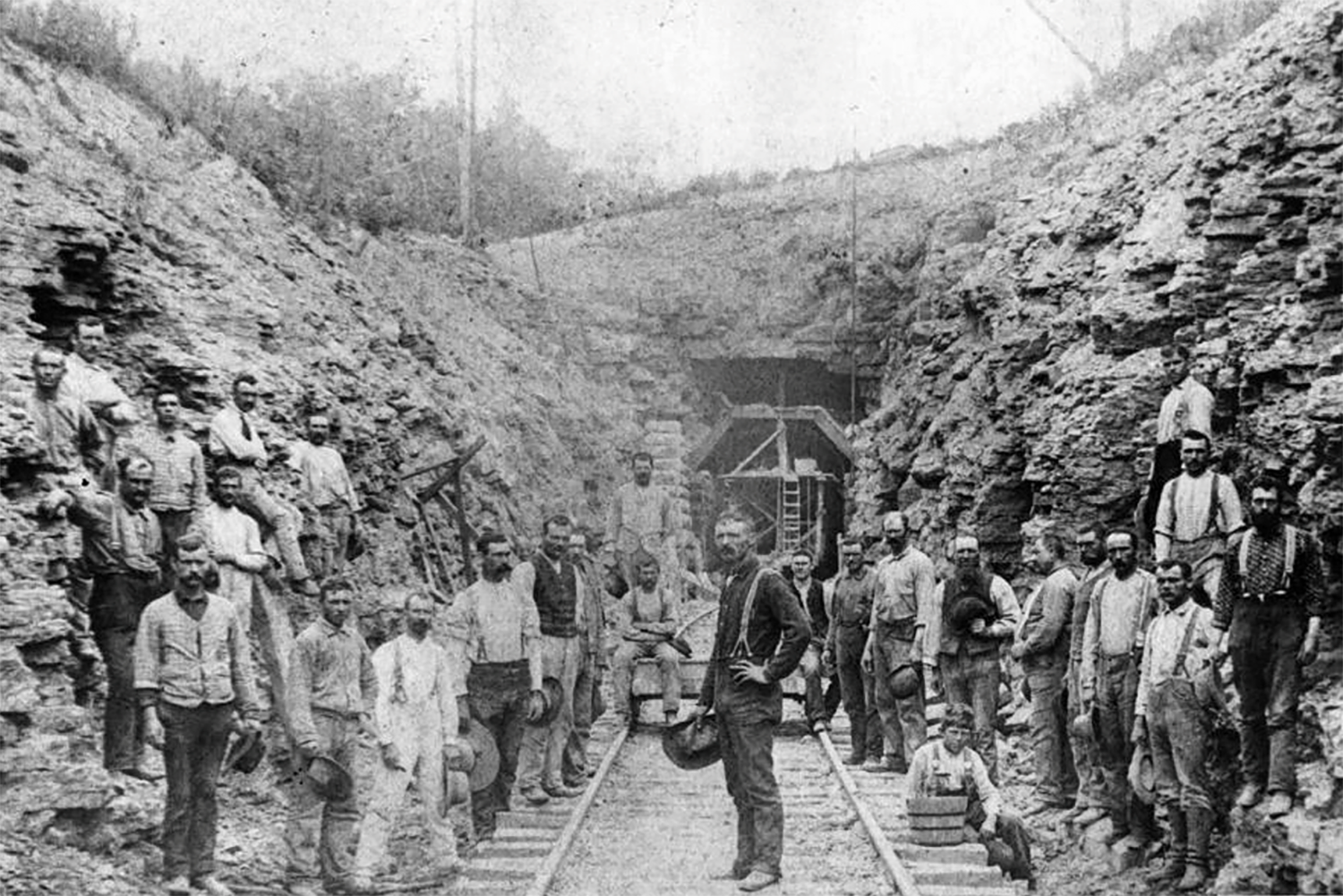
At 6:50 a.m. on Dec. 1, 1887, two crews digging toward one another inside a limestone ridge in Green County finally met. They had begun at opposite ends nearly a year earlier, using drills, explosives, steam-powered machinery and the labor of men who worked through extreme weather and dangerous conditions.
The meeting was a remarkable feat of surveying. Although the tunnel followed a curve, the excavations reportedly differed in alignment by less than an inch. The railroad now had a passage through the hill separating the Sugar River and Little Sugar River watersheds, opening the way for a new connection between Madison and Freeport, Illinois for the Chicago, Madison & Northern Railroad (CM&N) line.
But the achievement came with a warning. Water had already poured through the ceiling during construction, requiring reinforcement. In April 1888, barely two months after the first train passed through, a major rockfall blocked the tunnel. More collapses followed. What began as a triumph of 19th-century engineering would become a nearly 140-year contest with the geology surrounding it.
Stewart Tunnel, in the Town of Exeter east of New Glarus, eventually carried passenger and freight trains, fell silent as railroad service declined, and found new life on the Badger State Trail. Its seven-year closure beginning in 2019 and its reopening Nov. 16, 2026, are the latest chapters in a history that is as much about the people who built and maintained it as the trains and bicycles that passed through.
Remaining content is for paid members only.
Please subscribe to any paid plan to unlock this article and more content.
Subscribe Now