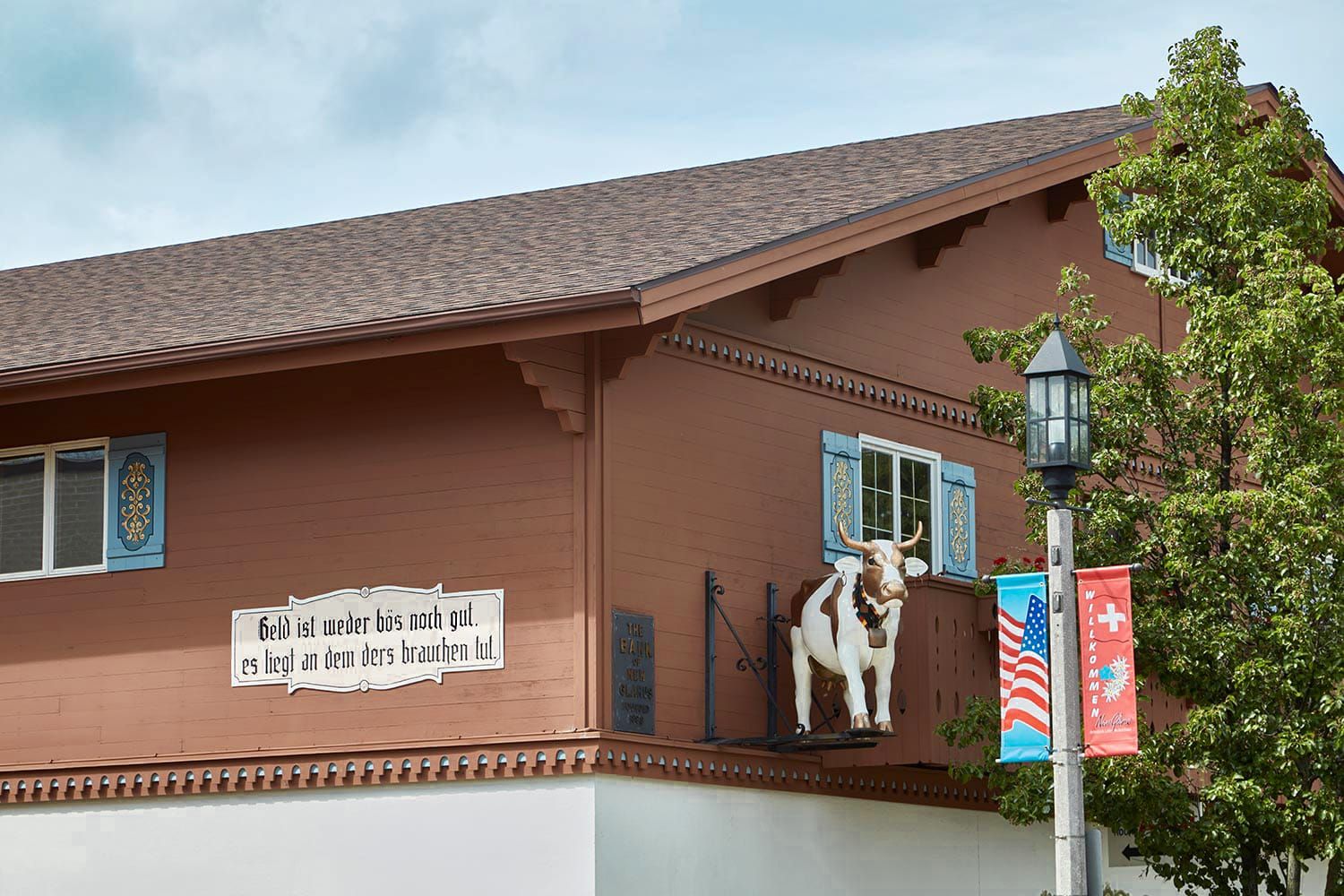
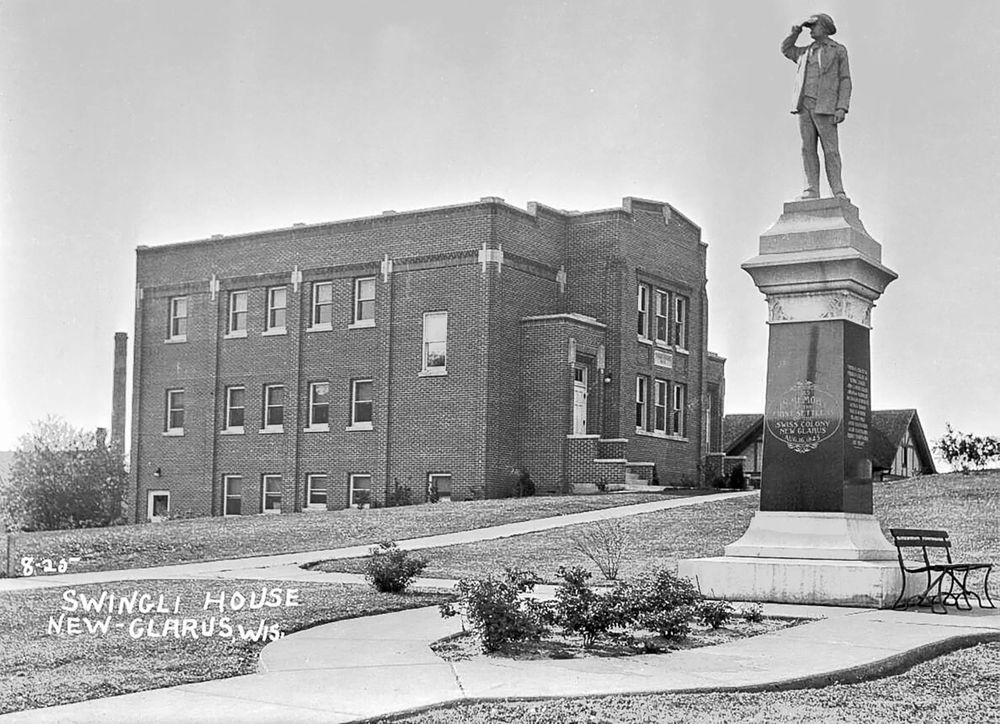
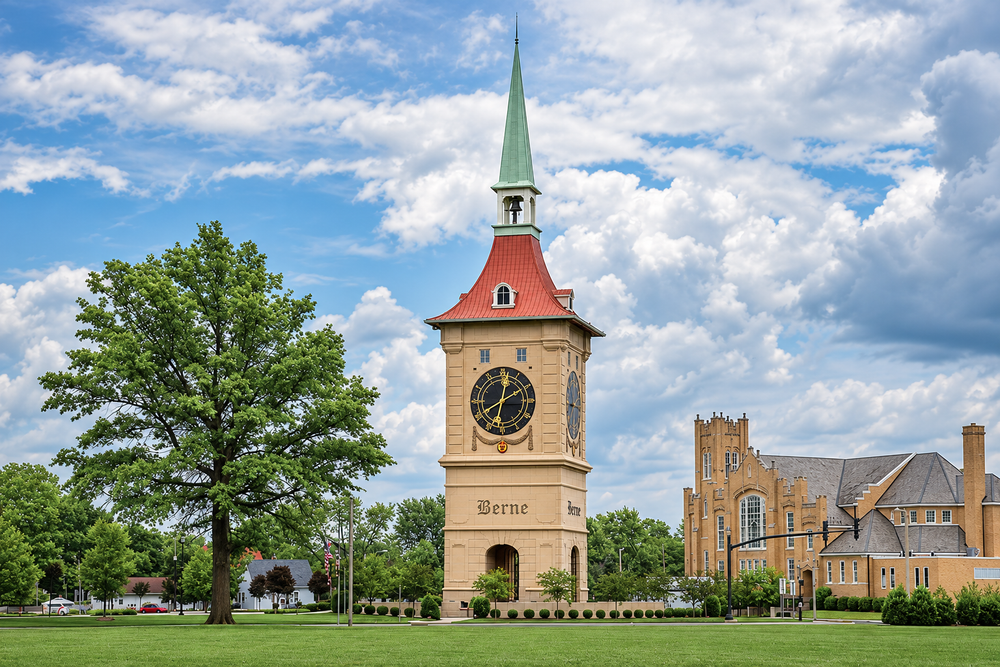
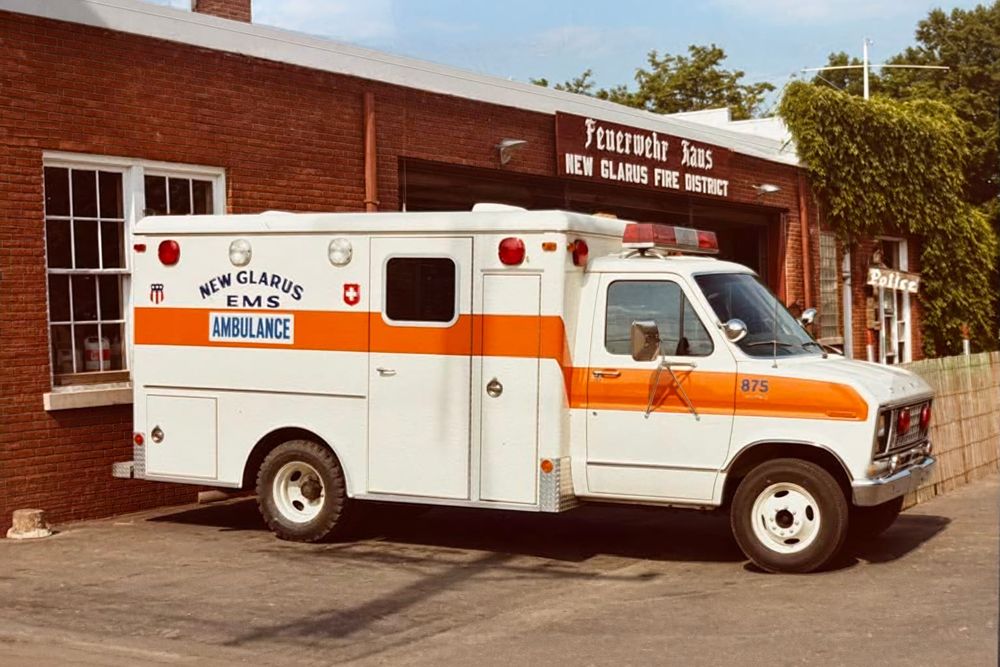
Walk through downtown New Glarus, and you'll find words written on buildings, storefronts, signs and murals that you won't see in most American small towns. Some are simple greetings. Others identify businesses or describe their purpose. And a few offer surprisingly thoughtful observations about money, home, hospitality and the passage of time.
They're part of what makes New Glarus feel like New Glarus. But while residents and visitors have probably passed these words hundreds of times, how many actually know what they mean?
The tradition has deep roots. Founded in 1845, New Glarus has maintained a particularly visible connection to its European heritage. Its Alpine architecture, festivals and traditions are obvious reminders of that history, but the language appearing throughout the village offers another connection to the community's Swiss identity.
Not every inscription is written in the same form of German. Some use standard German, while others reflect Swiss German, a collection of regional dialects spoken in German-speaking Switzerland. Although the two share much in common, Swiss German has its own vocabulary, expressions and spelling conventions. That distinction helps explain why some words look familiar while others may puzzle even someone who studied German in school.
Remaining content is for paid members only.
Please subscribe to any paid plan to unlock this article and more content.
Subscribe Now