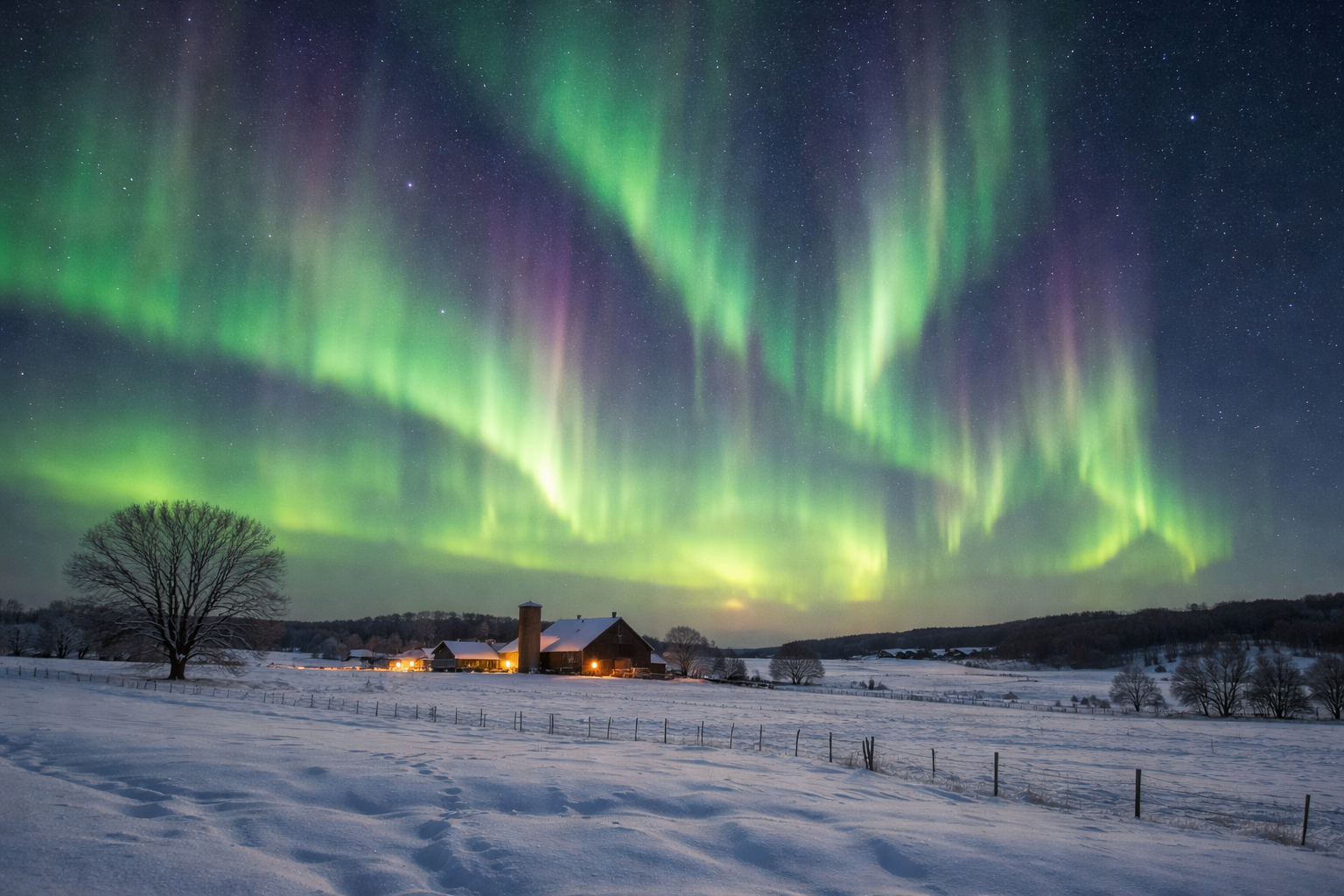
New Glarus residents may have plenty of reasons to look up in 2026, as astronomers point to a busy year for celestial events ranging from meteor showers and eclipses to continued solar activity that could spark northern lights across Wisconsin.
Several of the year’s most anticipated sky events will be visible without special equipment, making 2026 an inviting year for casual skywatchers, photographers, and families.
One of the standout events arrives in early spring. A total lunar eclipse on March 3 will be visible from Wisconsin, weather permitting. During the eclipse, Earth’s shadow will fully cover the moon, giving it a reddish hue commonly referred to as a “Blood Moon.”
Later in the year, meteor enthusiasts can look forward to the Perseid meteor shower, which peaks Aug. 12–13. The Perseids are among the most reliable and bright annual meteor showers, and minimal moonlight in 2026 should improve viewing conditions after midnight, especially from darker areas outside the village.
Remaining content is for paid members only.
Please subscribe to any paid plan to unlock this article and more content.
Subscribe Now