
On the Horizon: Could Tiny Trucks Find a Place on Wisconsin Roads?

A growing number of Americans are discovering inexpensive Japanese mini-trucks as an alternative to oversized pickups. For farmers and homeowners around New Glarus, their appeal is easy to see. Getting one onto a public road is another matter.

On the Horizon: Could Tiny Trucks Find a Place on Wisconsin Roads?
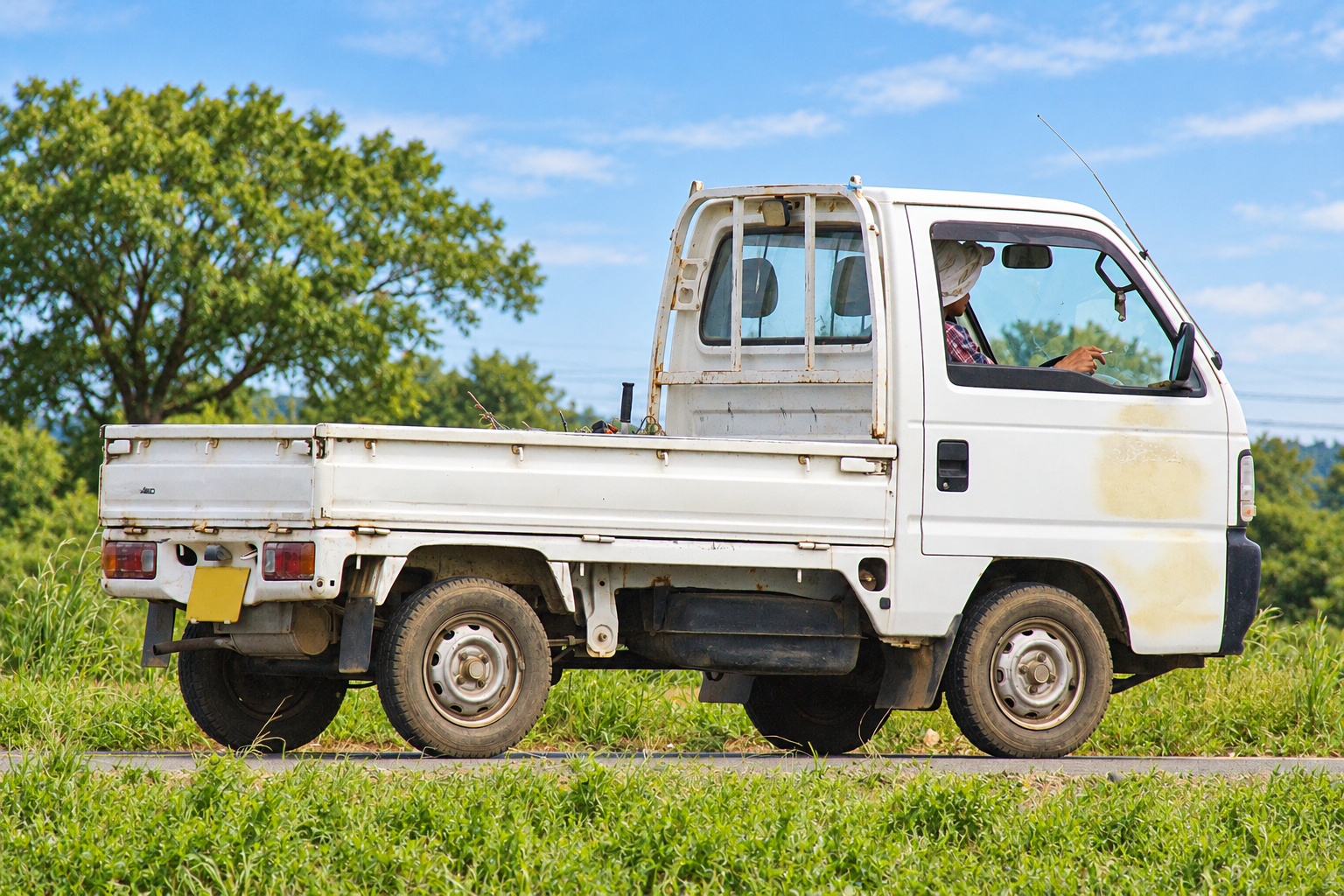
Small in size but big on practicality, Japanese kei trucks are gaining popularity among American farmers, homeowners and small businesses looking for an affordable alternative to increasingly expensive conventional pickup trucks.

On the Horizon is a New Glarus 360 feature looking beyond today’s headlines at larger economic, demographic, technological and cultural changes that may eventually reach our community. The goal is not to predict the future, but to recognize consequential changes while they are still far enough away to prepare for them.

For someone outside New Glarus who needs to haul firewood, fencing supplies or a few bags of mulch, a new pickup truck can be an extraordinary amount of machinery — and money — for a modest job. That helps explain the growing American fascination with something at the opposite end of the automotive spectrum: the Japanese kei truck.

Barely 11 feet long, often equipped with four-wheel drive and generally powered by an engine no larger than 660 cubic centimeters, these miniature pickups have enclosed cabs, heaters and functional cargo beds. Models such as the Suzuki Carry, Daihatsu Hijet, Honda Acty and Subaru Sambar were built for Japanese roads and everyday work, not simply as recreational toys.

Their appeal comes at a time when American pickups have become larger, more elaborate and considerably more expensive. Kelley Blue Book reported that the average new full-size pickup sold for $67,573 in September 2026, compared with $50,562 for the average new vehicle. Of course, not everybody needs a heavy-duty towing package, a cavernous crew cab or a dashboard filled with screens to haul a load of garden supplies.

The movement is no longer confined to car enthusiasts. Reporting based on Japanese vehicle-export data put U.S. kei-truck imports at roughly 7,500 in 2024, about three times the level five years earlier. The number measures imports, not the total fleet on American roads, but it suggests that a once-obscure category is attracting substantial attention.

Remaining content is for paid members only.

Please subscribe to any paid plan to unlock this article and more content.

Already have an account? Sign in

Comments available to premium members.

Create a premium account and join the discussion.

Already have an account? Sign in

Sign up for our New Glarus 360 newsletters

Breaking news, things to do and alumni updates—delivered.

Please check your inbox and confirm. Something went wrong. Please try again.