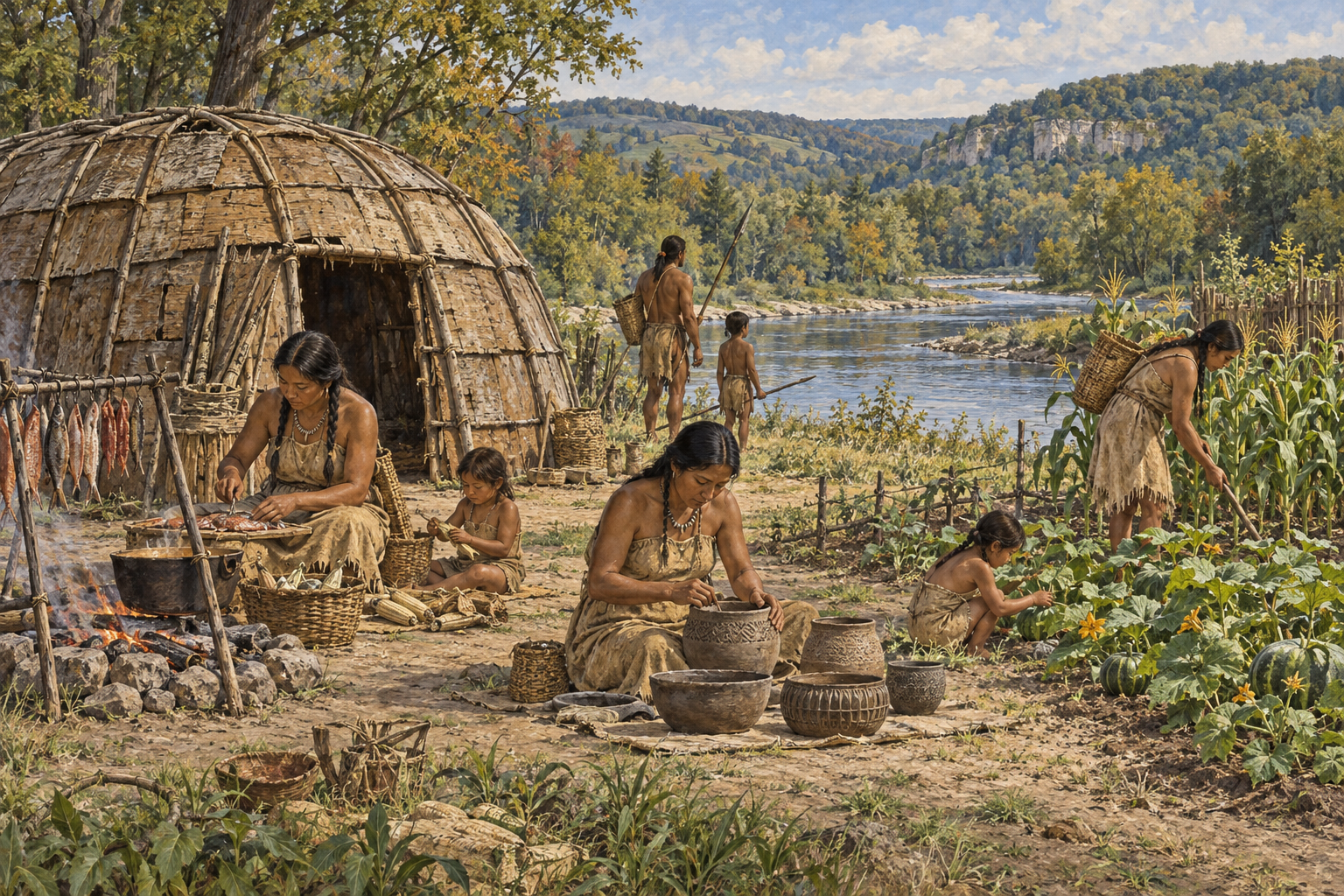
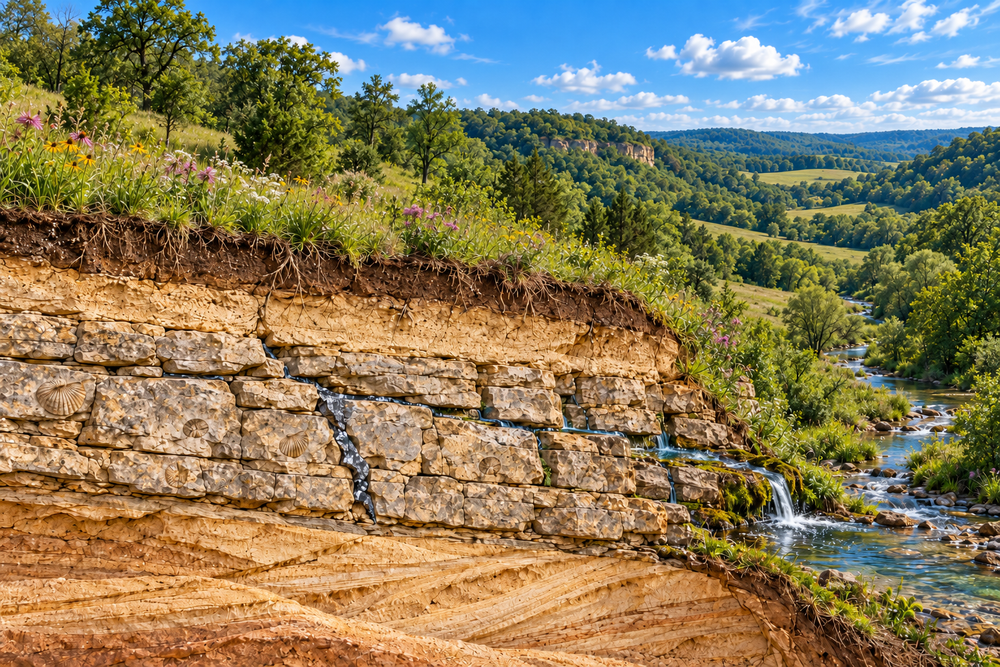
The familiar history of New Glarus usually begins in 1845, when Swiss settlers selected land in Green County and began building a colony that would become the village. Archaeological records tell a much older story. Long before those settlers arrived, Indigenous people had been using the surrounding hills, streams and ridges for generations stretching back centuries — and, in the broader Wisconsin record, thousands of years.
A 2004 archaeological inventory prepared for the Town of New Glarus by the Wisconsin Historical Society listed five prehistoric sites within the civil town. They include a Woodland mound and burial site, two campsite or village sites, a workshop site and a location containing Early Woodland finds. The public inventory gives only township sections rather than exact coordinates, and precise burial-site locations can be restricted for protection.
The most striking entry is GR-0008, an unnamed Woodland site in Section 14 of Town 4 North, Range 7 East. The state inventory classifies it both as a mound and as a cemetery or burial site. Section 14 covers roughly one square mile east of Railroad Street in the modern New Glarus area, but the inventory does not identify the mound's exact location publicly.
The other recorded sites surround it. GR-0012, the Hoesley site, is a prehistoric campsite or village in Section 10, roughly northwest of Section 14. GR-0159 is another prehistoric campsite or village in Section 2, farther north. GR-0298, the Jessica Pratt Site, is in Section 16, west of the central New Glarus area, and is classified as Early Woodland isolated finds. GR-0011, an unnamed prehistoric workshop site, is in Section 22, southwest of the central village area.
Remaining content is for paid members only.
Please subscribe to any paid plan to unlock this article and more content.
Subscribe Now