The hills around New Glarus seem permanent. Farms cling to their slopes, roads curl through valleys and the village sits below a ridge that has framed the community since the first Swiss settlers arrived in 1845.
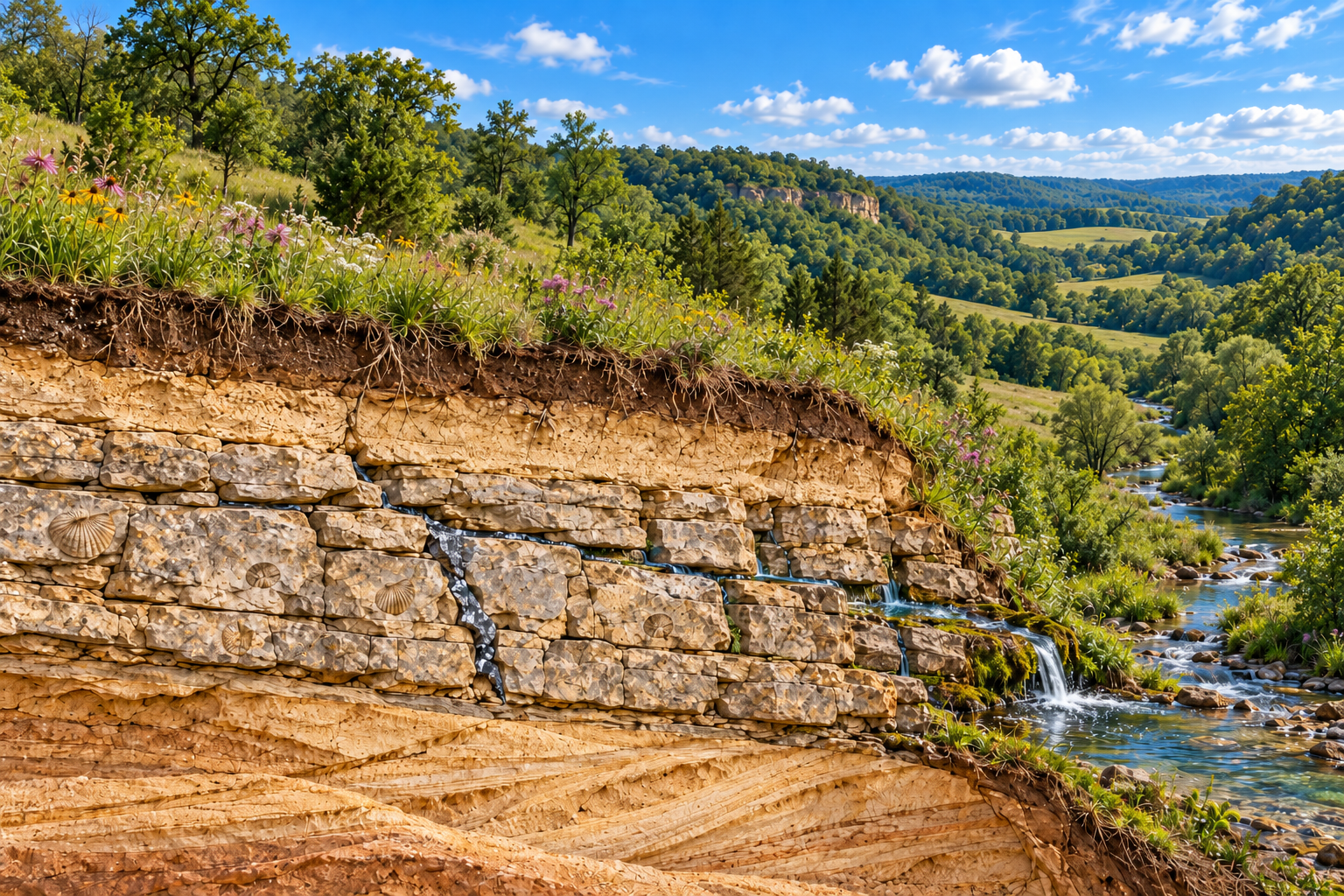
But the landscape is anything but simple. Beneath those hills are the remains of ancient tropical seas. Above them lies dust blown from the edge of continental glaciers. Water still moves through fractures in the rock, feeding springs while also creating a direct connection between what happens on the land and what eventually reaches groundwater.
The geology also helps explain why this corner of Wisconsin looks different from much of the state. New Glarus sits near the eastern edge of the Driftless Area, a landscape largely spared from the most recent continental glaciation and left to be carved by streams rather than smoothed and buried by ice.
Look closely enough, and the local landscape becomes a time machine. Here are 10 of the most interesting geological facts about New Glarus — plus one local geological name that has nearly disappeared from use.
Remaining content is for paid members only.
Please subscribe to any paid plan to unlock this article and more content.
Subscribe Now