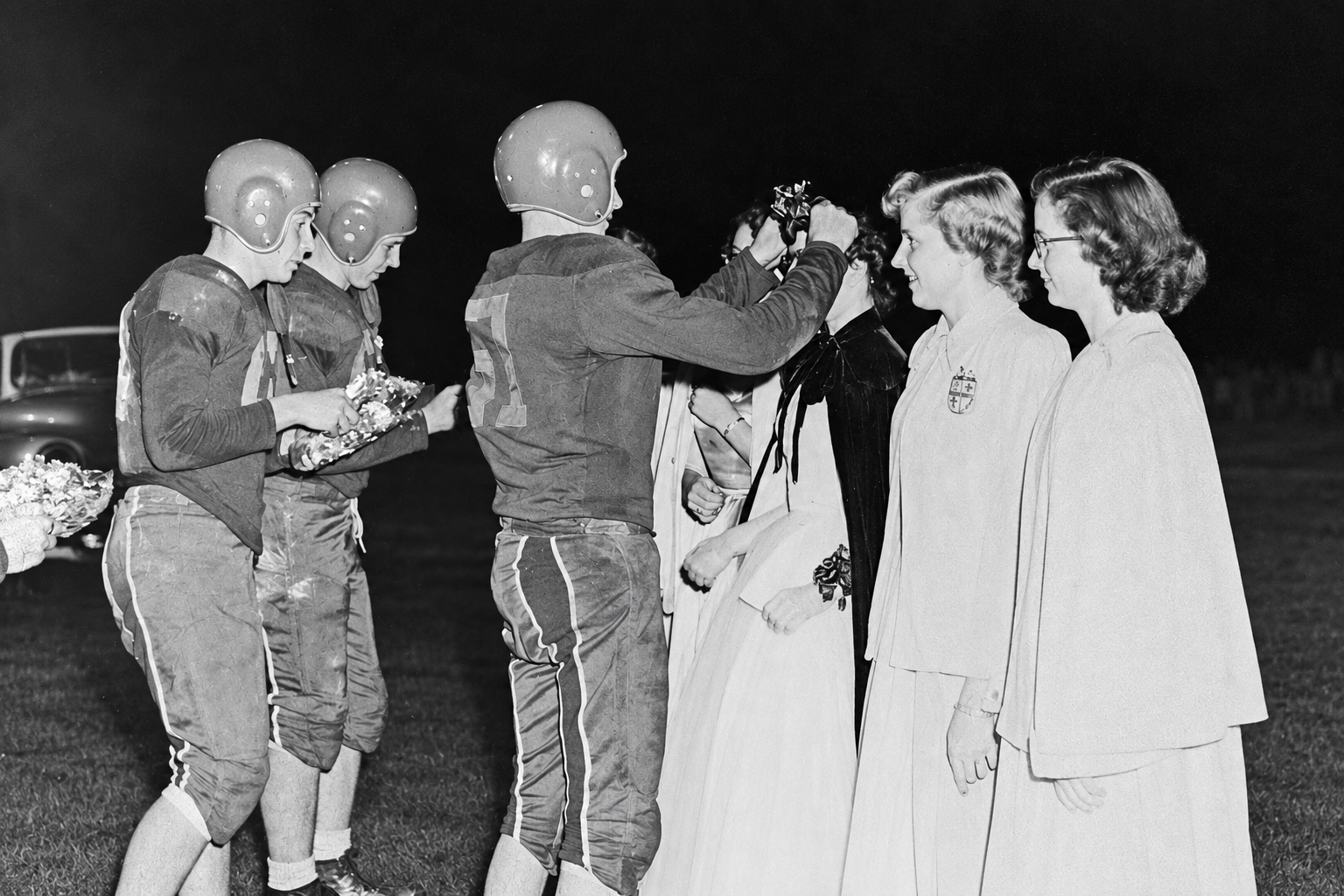
For generations of New Glarus students, Homecoming has followed a familiar rhythm: spirit week, a parade, Friday night football, a court and a Saturday dance. Some of the details change from one class to the next, but the basic outline feels almost permanent.
It is not. The American Homecoming tradition grew out of a much older idea — inviting people who had moved away to return to a place they once called home — and colleges turned that idea into an autumn celebration built around alumni and football. High schools eventually adopted much of the same formula.
Exactly who invented the modern college Homecoming remains disputed. Baylor University held an elaborate Homecoming in Waco, Texas, in 1909. The University of Illinois staged what it called its first annual Fall Home Coming in 1910. The University of Missouri followed in 1911 with the celebration that Mizzou long promoted as the birthplace of the tradition.
All three events contained pieces that would become instantly recognizable today: alumni returning to campus, school colors, reunions, parades or pep events and, especially, football. What began as a way to bring graduates back while school was in session became one of the most durable rituals in American school life.
Remaining content is for paid members only.
Please subscribe to any paid plan to unlock this article and more content.
Subscribe Now